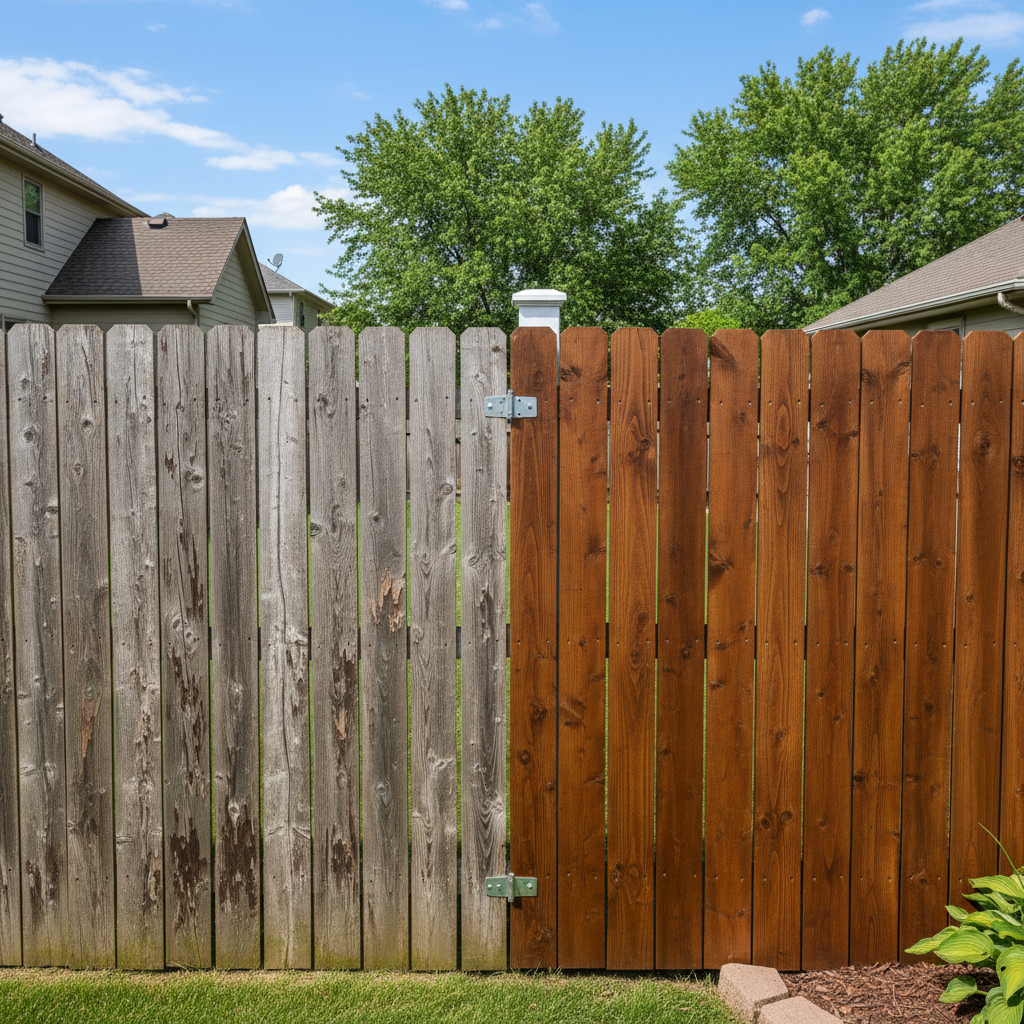
So, you've got a fence, or you're about to get one, and now you're wondering how to protect it. The big question usually boils down to: should I stain it or paint it? It's not just about what looks good right now; it's about what's going to hold up to our Omaha weather and how much work you're willing to put in down the road.
Understanding the Basics: Stain vs. Paint
Let's clear up the main difference first. Think of it like this: stain soaks into the wood, while paint sits on top of it. That fundamental difference is what drives pretty much every other factor we're going to talk about.
- Stain: This stuff penetrates the wood fibers. It can be transparent, semi-transparent, or solid. Transparent and semi-transparent stains let the natural wood grain show through, which a lot of folks really like. Solid stains give you more color but still let some of that wood texture come through. They're designed to protect the wood from moisture and UV rays from the inside out, in a way.
- Paint: Paint forms a solid, opaque layer on the surface of the wood. It completely covers the grain and gives you a much wider range of colors. It creates a protective barrier that shields the wood from the elements.
Appearance: What Look Are You Going For?
This is often the first thing people consider, and it's a big one. Do you love the natural look of wood? Then stain is probably your go-to. A transparent or semi-transparent stain will enhance the wood's natural beauty, letting those knots and grain patterns shine. It gives a really classic, rustic feel, which fits great with a lot of the older homes in areas like Dundee or Benson.
If you want a bold color, something that really pops or matches your house trim exactly, then paint is your only real option. You can get almost any color under the sun with paint. It gives a more uniform, finished look that some people prefer, especially with modern homes.
Durability & Protection: Battling Omaha's Elements
This is where the rubber meets the road, especially here in Nebraska. We get everything: scorching summers, brutal winters with snow and ice, and those crazy spring thunderstorms. Your fence needs to stand up to a lot.
Stain: Generally, stain holds up well against moisture and UV. Because it soaks in, it's less prone to peeling, cracking, or blistering. When it starts to wear, it usually just fades or becomes patchy, which can be less noticeable than peeling paint. However, transparent and semi-transparent stains offer less UV protection than solid stains or paint, so the wood itself might gray out a bit faster.
Paint: Paint provides a thicker, more robust barrier against the elements. It's excellent at blocking UV rays and moisture. The downside? When paint fails, it really fails. It'll chip, peel, and blister, especially on surfaces that get a lot of sun exposure or are constantly wet. Once it starts peeling, it looks pretty rough, and it's a much bigger job to fix.
Maintenance & Longevity: How Much Work Are You Up For?
Nobody wants to spend every weekend working on their fence. So, how often will you need to reapply, and what's the process like?
Stain: Typically, a good quality stain will last anywhere from 2-5 years for transparent/semi-transparent and 5-7 years for solid stains. When it's time to reapply, the prep work is usually simpler. You'll need to clean the fence thoroughly, maybe do a light sanding, and then you can often just apply another coat. You don't usually have to strip it all off unless it's in really bad shape.
Paint: Paint can last longer, often 5-10 years, sometimes more if it's applied perfectly and you use top-tier products. But here's the kicker: when it's time to repaint, the prep work is a beast. You'll likely need to scrape, sand, prime, and then paint. If you don't remove all the old, peeling paint, the new coat won't stick properly, and you'll be right back to peeling in no time. It's a much more labor-intensive process.
Cost: Initial Outlay and Long-Term Value
Let's talk money. Initial costs can vary, but generally:
Stain: Often, the material cost for stain is a bit less than paint, and because the prep work is simpler, the labor cost (if you're hiring someone like us at Apex Fencing Solutions) can also be lower initially. However, since you'll likely be reapplying more frequently, the long-term cost might even out or even exceed paint over several decades.
Paint: Paint materials can be a bit pricier, and the extensive prep work means higher labor costs upfront. But because it lasts longer between applications, your cost per year might actually be lower in the long run, provided it's maintained correctly.
My Recommendation for Omaha Homeowners
Given our climate here in Omaha – those harsh winters with freeze-thaw cycles, the humid summers, and strong sun – I generally lean towards stain, specifically a good quality solid or semi-solid stain, for most wood fences. Here's why:
- Less Peeling: Stain's ability to penetrate means it's less likely to peel and chip, which is a huge advantage when dealing with extreme temperature swings. Peeling paint is not only ugly but also leaves your wood exposed and vulnerable.
- Easier Maintenance: Re-staining is a much more manageable project than repainting. You're less likely to put off the maintenance, which means your fence stays protected longer.
- Natural Look: Many people appreciate the natural wood aesthetic, and even solid stains let some of that wood character come through without hiding it completely.
Now, if you absolutely need a specific color to match your home or you're aiming for a very crisp, uniform look, then paint is your only option. Just be prepared for the more rigorous prep work when it's time for a refresh. No matter which you choose, make sure the wood is clean, dry, and prepped properly. That's half the battle right there.
```