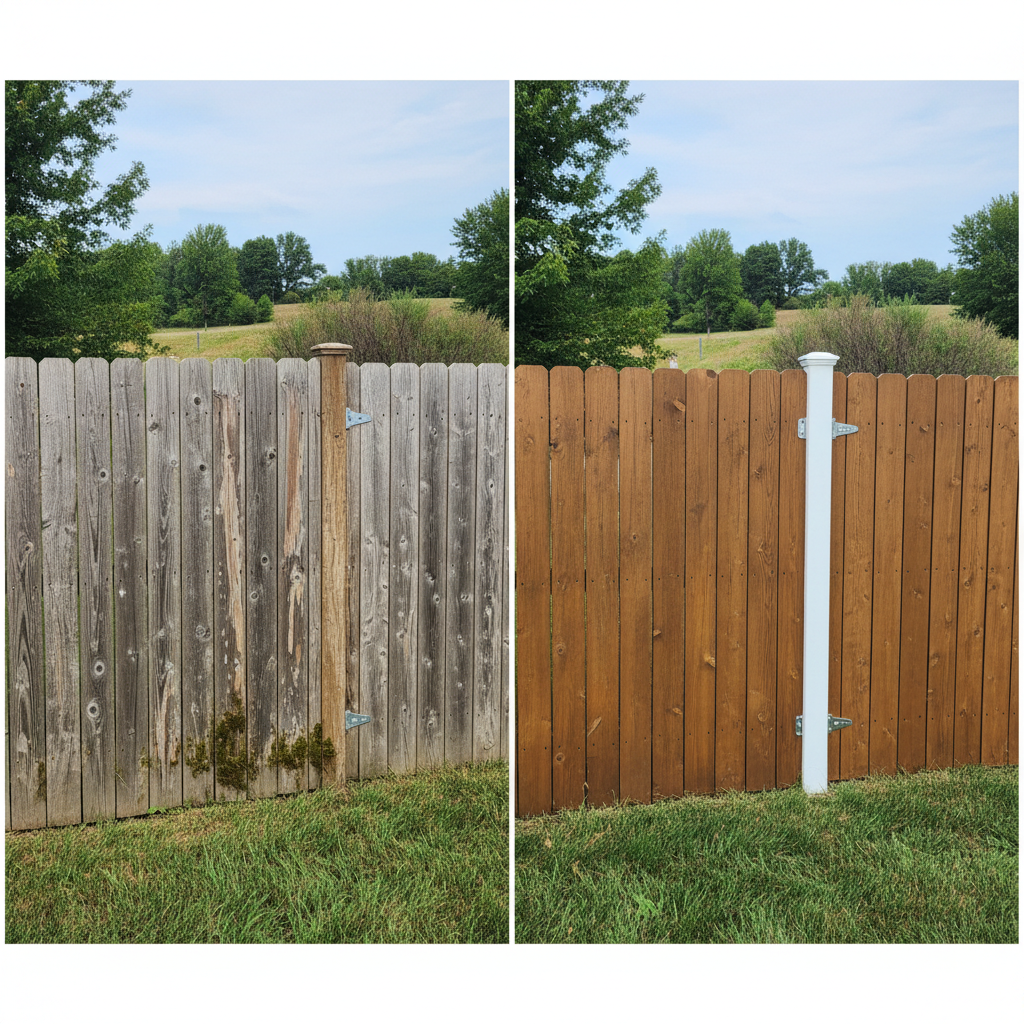
Alright, so you've got a fence, maybe a brand new one, or maybe one that's looking a little tired. Now you're wondering, should I stain it or paint it? It's a common question I get from folks all over Omaha, from the older homes in Dundee to the newer builds out west. Both options have their place, but they're definitely not the same, especially when you consider our crazy Nebraska weather.
Understanding the Basics: Stain vs. Paint
Let's clear up what we're actually talking about here. When I say stain, I'm generally referring to products that penetrate the wood. They soak in, coloring the wood fibers while still letting the natural grain show through. Think of it like putting on a tinted moisturizer – it enhances what's already there.
Paint, on the other hand, sits on top of the wood. It forms a solid, opaque layer that completely covers the grain. It's more like putting on a full coat of foundation – it changes the surface appearance entirely. This fundamental difference is key to understanding everything else.
Cost: What's the Initial Hit?
Upfront, you might find that the cost of materials for stain and paint can be pretty similar, depending on the quality you're going for. However, labor can sometimes be a bit different. Paint often requires more prep work, especially if you're dealing with an older fence that needs scraping or heavy cleaning to ensure good adhesion. If you're doing it yourself, factor in that extra time.
For a new fence, the prep is usually minimal for both. But if you're rejuvenating an old fence, say one that's been battered by a few harsh Omaha winters and summers, getting paint to stick right can be a bigger job than getting stain to absorb properly.
Durability & Protection: Battling Nebraska Weather
This is where the rubber meets the road, especially in a place like Omaha where we get everything from blizzards to scorching heat and those wild temperature swings. Paint generally offers a thicker, more protective barrier against the elements. It's like a shield. It can stand up well to UV rays, moisture, and even some physical wear and tear. A good quality exterior paint can last anywhere from 5 to 10 years, sometimes more, before needing a full repaint.
Stain, while it penetrates, doesn't offer the same kind of surface protection. It's more about preserving the wood from within and usually contains UV inhibitors to prevent graying. A semi-transparent stain might last 2-4 years, while a solid stain (which is almost like a thin paint) might go 3-5 years. The natural wood is still more exposed to the elements with stain, which means it can weather and degrade faster on the surface.
Maintenance: Your Future Self Will Thank You (or Curse You)
Here's the big one for most homeowners. When paint starts to fail, it usually cracks, peels, and chips. When this happens, you can't just paint over it. You've got to scrape, sand, prime, and then paint. It's a significant amount of work to get a smooth, durable finish again. Ignore it, and your fence will look pretty rough and won't be protected.
Stain, on the other hand, tends to fade and wear away more gradually. It doesn't usually peel. When it's time to re-stain, you often just need to clean the fence thoroughly and then apply another coat. It's generally a much less labor-intensive process than repainting, which is a huge plus for busy folks. Just remember, if you decide to go from stain to paint later, you'll need to do some serious cleaning and priming to ensure the paint adheres properly.
Appearance: What Look Are You Going For?
This is purely aesthetic. Do you love the natural look of wood? The grain, the knots, the subtle variations? Then stain is your friend. It enhances the wood's natural beauty. You can get clear stains, semi-transparent ones that add a hint of color, or solid stains that provide more opaque coverage while still letting some texture show through.
If you want a uniform, solid color – maybe to match your house trim, or just a crisp white or black – then paint is the way to go. Paint offers a much wider range of color options and a more finished, formal look. It completely covers any imperfections in the wood, which can be a pro or a con depending on your preference.
My Recommendation for Omaha Homeowners
Given the extreme temperature fluctuations, the harsh sun, and the heavy snow and ice we get here in Omaha, I generally lean towards stain for most wood fences. Why?
- Easier Maintenance: The biggest reason. Re-staining is simply less work than repainting. You'll thank yourself in a few years when it's time for touch-ups or a fresh coat.
- Natural Look: Most people invest in a wood fence because they like the look of wood. Stain lets that natural beauty shine through.
- Better for Wood Health: Because stain penetrates, it allows the wood to breathe a bit more than paint does. This can be beneficial in our humid summers and wet springs, helping to prevent moisture from getting trapped and causing rot or mildew under a solid paint film.
Now, there are exceptions. If you have a specific aesthetic in mind that absolutely requires an opaque, solid color, then paint is your only choice. Just be prepared for the maintenance commitment. Also, if your fence is made of a composite material, then painting might be the better or only option, but we're talking about natural wood fences here.
Ultimately, it comes down to what you value more: the natural look and easier maintenance of stain, or the solid color and potentially longer initial durability of paint with more intensive future upkeep. For my money, and what I've seen last best and look good with the least hassle around here, stain usually wins out. If you need help deciding or want to talk about getting your fence protected, give us a call at Apex Fencing Solutions. We've seen it all and can help you make the right choice for your specific fence and property.